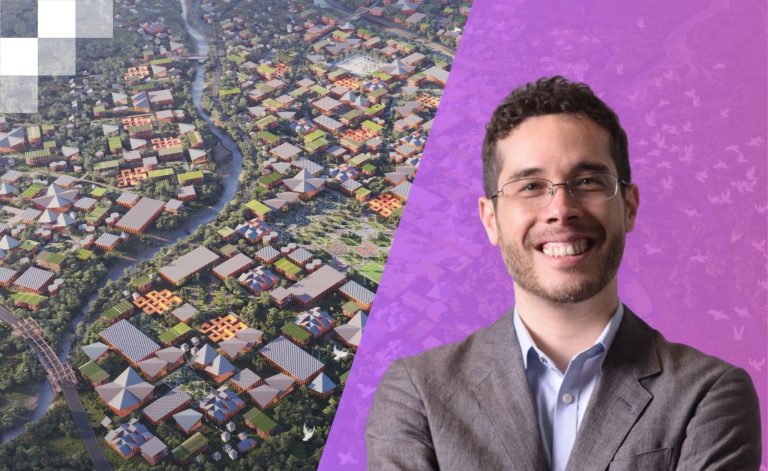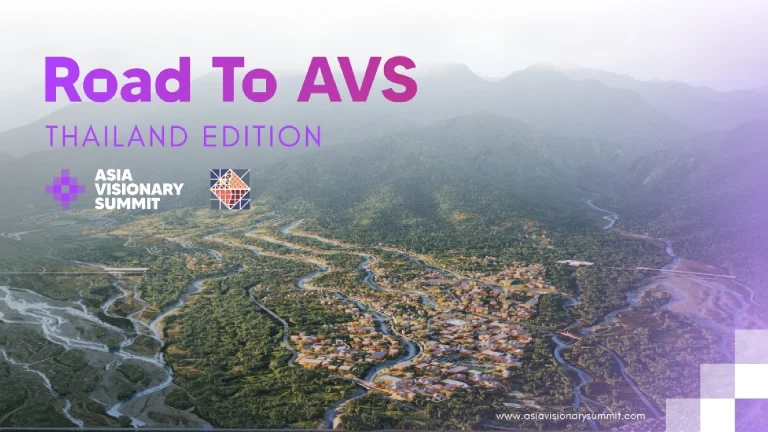

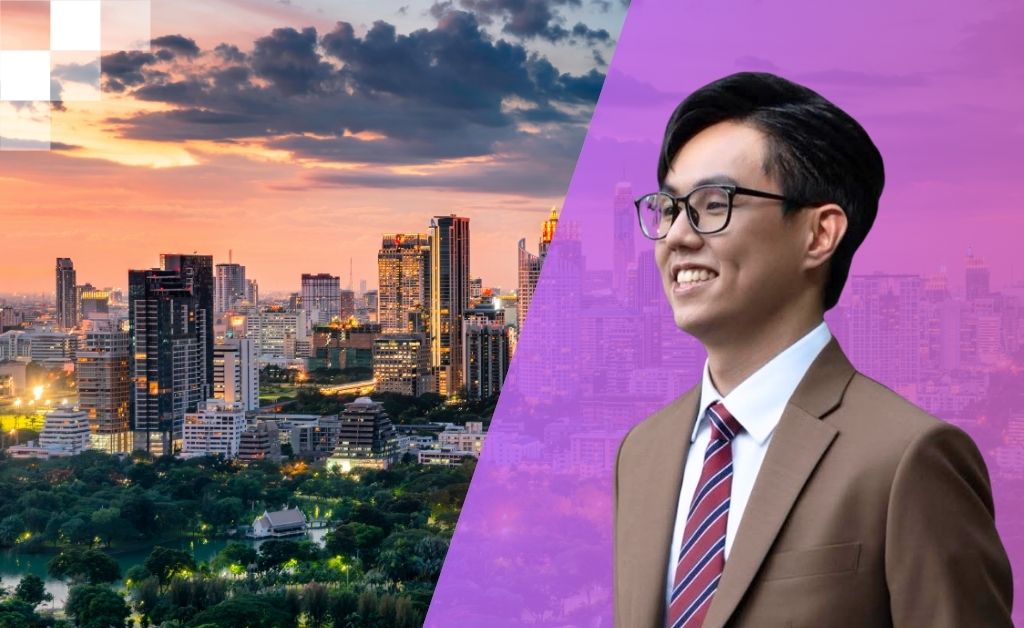
Earlier this year, I attended the Road to AVS — Thailand Edition. I walked in curious. I walked out thinking about it for weeks.
I run a crypto data startup in Thailand / Singapore. I’ve been in this industry long enough to see cycles of hype and collapse, to watch innovation outrun regulation, and to see real people get hurt in the gap between the two. I’ve also been using AI heavily in my work recently and I recognise the same pattern: transformative technology moving faster than anyone can govern it responsibly.
So when I heard about Gelephu Mindfulness City, a new jurisdiction being built from scratch in Bhutan, designed around mindfulness, sustainability, and digital innovation, my first instinct was scepticism. I’ve seen enough crypto-friendly zones that turn out to be more about arbitrage than ambition.
But the more I learned, the more I realised GMC is different. Not because it promises to get everything right, no one can. But because it starts from a genuinely different premise. Bhutan is a country that measures national progress by happiness, not GDP. That has been carbon- negative for its entire modern history. That mined Bitcoin with surplus hydropower before most countries had even formed a crypto policy. And now it is building a city that tries to hold all of these things together that are innovation, ethics, sustainability, culture in one place.
As a Thai person, something about this resonated deeply. Thailand and Bhutan share Buddhist roots, a reverence for monarchy, and a belief that progress should not come at the cost of who you are. We are both countries that welcome the world in, and sometimes pay the price for that openness. But we keep the doors open anyway, because we believe connection creates more value than isolation.
This article is my attempt to think through what that connection could look like between Thailand and GMC, between experience and ambition, between a country that has learned hard lessons and a city that is trying to build on them.
What Is Actually Being Built in Gelephu, Bhutan
Gelephu Mindfulness City is not a concept paper.
In December 2024, Bhutan’s King Jigme Khesar Namgyel Wangchuck established GMC by Royal Charter as a Special Administrative Region spanning over 2,600 km², with its own government, laws, and courts, operating independently from Bhutan’s national government.
Since then, things have been moving fast.
GMC enacted its first law on 26 December 2024, adopting 18 Singaporean laws and 10 Abu Dhabi Global Market financial regulations as its legal foundation thus creating a business environment familiar to international companies. The city masterplan is being designed by Bjarke Ingels Group, with engineering by Arup.
Real companies are already setting up. Matrixport received a Financial Services Licence in September 2025, covering structured products, asset management, and digital asset custody. Nansen, the blockchain analytics platform, announced in February 2026 that it would build a team and establish operations in GMC.
The tax environment is designed to attract investment: 17% corporate tax, zero capital gains tax, no additional dividend tax, and losses can be carried forward indefinitely. A Digital Nomad Visa is available at $2,800 per year with 12-month renewable residency. Companies can incorporate online through the Gelephu Investment and Development Corporation.
In December 2025, King Jigme Khesar announced the Bitcoin Development Pledge — committing up to 10,000 BTC (approximately $1 billion at the time) from Bhutan’s national reserves toward GMC’s long-term development. The same month, Bhutan launched TER, a gold-backed digital token on the Solana blockchain, connecting traditional gold reserves with modern digital finance.
This is a jurisdiction that is writing its own rules, welcoming real companies, and backing its vision with national assets. The question is no longer whether GMC is serious. It is who will help build it.
Mindfulness as a Way of Doing Business
The word “mindfulness” in GMC’s name might sound like a wellness trend. It is not.
Bhutan is the country that created Gross National Happiness, the idea that a nation’s progress should be measured not just by economic growth, but by the well-being of its people, the health of its environment, and the preservation of its culture. This is not a slogan. It is how Bhutan makes policy.
GMC brings this philosophy into the world of business and innovation. Companies setting up in
GMC go through a values-alignment process. The goal is to build an ecosystem where
innovation is encouraged but where the question “does this serve people?” is asked from the beginning, not as an afterthought.
This resonates with me personally. I’ve spent years in the crypto industry, and I’ve seen how powerful new technology can be and how much damage it can cause when it moves faster than the rules designed to protect people. The collapses of platforms like FTX and Terra/Luna didn’t happen because the technology itself was broken. They happened because there weren’t enough guardrails in place. In Thailand, we experienced this directly when Zipmex collapsed, roughly 60,000–70,000 Thai investors lost access to around 2 billion baht. The rescue deal fell apart. People were offered pennies on the dollar.
GMC does not claim to have all the answers. No system can guarantee that things won’t go wrong. But it is being built with awareness of what has gone wrong elsewhere, with proper licensing, clear rules modelled on trusted systems like Singapore and Abu Dhabi, and a culture that treats responsibility as part of the foundation, not a box to tick.
For those of us who believe technology should help people rather than take advantage of them, the starting point matters.
Two Buddhist Kingdoms, One Shared Foundation
Thailand and Bhutan are among the last remaining Buddhist kingdoms on Earth.
Thailand follows the Theravada tradition. Bhutan practises Vajrayana Buddhism. These are different paths but they grow from the same roots: mindfulness, compassion, and the belief that life is about more than material success.
In Thailand, Buddhism is not something reserved for temples. It is part of daily life. Over 40,000 temples across the country. Approximately 300,000 monks. Morning almsgiving as a daily practice, not just a special occasion. Business openings blessed by monks. Buddhist holy days observed nationwide. Meditation has been part of Thai culture for centuries long before it became a global trend.
Bhutan’s spiritual life runs equally deep. Dzongs, ancient fortress-monasteries, serve as both government offices and places of worship. Prayer flags line every mountain pass. The sacred and the civic have never been separated.
And here is something remarkable: King Bhumibol Adulyadej’s Sufficiency Economy Philosophy and Bhutan’s Gross National Happiness are the only two national development philosophies on Earth that are monarch-initiated, rooted in Buddhism, and internationally recognised as genuine alternatives to GDP-first thinking. Both say the same thing: progress without balance is not really progress.
What strikes me is that both countries have managed something difficult modernising without losing their soul. Thailand has 5G, ride-hailing apps, and one of the world’s most advanced digital payment systems and monks still walk through Bangkok every morning collecting alms. Bhutan mines Bitcoin with hydropower and issues digital tokens on modern blockchains and its king still consults the monastic body on national matters. That ability to hold tradition and innovation together, without seeing them as contradictions, is something special. And it is the foundation on which GMC is being built.
The relationship between the two countries is deepening in tangible ways. In June 2025, Thailand and Bhutan signed a Free Trade Agreement which is the first between them with a goal to grow trade from $31 million to $120 million. The Thai King and Queen visited Bhutan in April 2025. Thailand already accounts for 10–17% of Bhutan’s annual foreign investment, with interests in infrastructure, healthcare, retail, and agriculture.
These are not just diplomatic gestures. They are the building blocks of a real partnership.
Sustainable Design and Clean Energy
The connection between Thailand and Bhutan goes beyond culture. It extends to how both countries think about the relationship between growth and the natural world.
Bhutan is the only carbon–negative country on Earth. Its constitution requires at least 60% forest cover that is currently over 72%. The country’s forests absorb more than double the CO2 it produces. Over 90% of Bhutan’s energy comes from hydropower, and roughly 70% of what it generates is exported to India, saving an estimated 4.4 million tonnes of CO2 each year. Bhutan even mined Bitcoin using surplus clean energy, turning excess hydropower into a national digital asset.
This environmental commitment is baked into GMC’s DNA. The city is being built in a carbon- negative country, designed by architects who treat nature as a partner rather than something to build over.
Thailand’s sustainability story is different but equally real. The government’s Bio–Circular–Green ( BCG) Economy Model aims for BCG industries to reach 25% of GDP. The Board of Investment offers tax incentives of up to 13 years for green businesses. Thailand’s Climate Tech Lab to Market programme has produced over 30 startups in areas like clean energy, sustainable transport, and circular materials. Thai companies have pioneered blockchain-based energy trading.
Bhutan brings clean energy abundance and a constitutional commitment to sustainability. Thailand brings entrepreneurs, startups, and green finance know-how. Together, they create something neither could build alone which is a corridor for sustainable innovation with both the energy and the ecosystem to make it real.
Health, Wellness, and Living Well
GMC’s vision goes beyond business. It asks: what does it look like when a city is designed around people actually living well?
Bhutan’s approach to health has always been holistic. Traditional Bhutanese medicine (Sowa Rigpa) treats physical health, mental well-being, and spiritual balance as one system, not separate departments. In GMC, this tradition is meant to work alongside modern healthcare, creating a wellness environment where prevention matters as much as treatment.
The city itself is designed to support well-being: walkable streets, clean air, access to nature, and spaces for reflection and contemplation in a country with some of the purest air in Asia.
Thailand is already a global leader in this space. It is the top medical tourism destination in Southeast Asia, with hospitals like Bumrungrad serving over a million international patients every year. Thailand’s wellness industry : traditional massage, herbal medicine, meditation retreats, longevity clinics, is deeply developed and globally recognised.
I see a genuine opportunity here. Longevity and preventive health are becoming one of the fastest-growing sectors globally. Thailand already has the medical talent and the wellness culture. Bhutan has the environment and the philosophy. A wellness ecosystem in GMC that brings these together, Thai medical expertise, Bhutanese traditional healing, set in a city designed for well-being with some of the cleanest air in the region, could be something truly unique. Not just a resort, but a model for how health can be built into the way a city works.
Digital Innovation and What Thailand Has Learned
Thailand’s experience with digital assets and fintech is one of the most developed in the region and one of the most instructive.
Thailand has one of the highest numbers of licensed crypto exchanges in the world. The regulator has built a formal framework for digital tokens, including rules for tokenising real-world assets. In 2025, the government introduced a five–year tax break on cry p to gains through licensed platforms, and approved major stablecoins for use. The Bank of Thailand was one of the first central banks in Asia to experiment with digital currency.
But progress has come with painful lessons.
When Zipmex collapsed in the wake of the 2022 crypto downturn, roughly 60,000–70,000 Thai investors were affected, with around 2 billion baht frozen. A rescue deal fell through. Investors were ultimately offered just a few cents for every dollar they had put in. Thailand has also dealt with cross-border money laundering through digital channels and blocked five unlicensed foreign exchanges in 2025.
These experiences shaped how I think about building in this space. Thailand didn’t walk away from crypto after Zipmex. It chose to regulate more carefully. And that response, the willingness to keep going while learning from mistakes, is what makes Thailand’s experience so relevant. Not because everything went smoothly, but because the country has been through the full cycle: excitement, problems, recovery, and rebuilding.
Thailand’s startup ecosystem has also shown what is possible. Bitkub became one of the country’s first unicorn companies as a crypto exchange. Flash Express reached billion-dollar scale in logistics. Ascend Money (True Wallet) built a fintech platform for tens of millions of users. Band Protocol, founded in Thailand, built a globally used blockchain infrastructure project. And Agoda proved that Bangkok can be home to world-class technology teams by building one of the world’s largest travel platforms from Thailand.
The Band Protocol story interests me. Thai founders built a global product, but they had to look beyond domestic borders to reach that scale. GMC could offer a new option: a jurisdiction designed for digital innovation, where the rules are built for experimentation rather than layered on top of an older system. Not a replacement for Thailand’s own ecosystem, but a place to try things that aren’t yet possible at home.
Growing the Next Generation
Bhutan is a young country (median age around 28) but small, with roughly 780,000 people. Many talented young Bhutanese leave for opportunities abroad.
GMC is partly an answer to that: a globally connected zone that gives young Bhutanese a reason to stay, while attracting international talent that might not otherwise consider Bhutan.
The Asia Visionary Summit’s Visionary 108 programme makes this concrete. Over six months, across seven countries, it selects 108 entrepreneurs working in renewable energy, ethical AI, food systems, health, and education. These founders will be among the first to set up in GMC, shaping the community from its earliest days.
This is what excites me most as a startup founder. Being early matters. The first companies in GMC will shape its culture and its direction. For entrepreneurs from Thailand and across the region, this is not just a conference, it is a chance to help build something from the ground up.
Thailand can contribute meaningfully here. Bangkok has a strong pool of engineers and developers experienced in crypto, AI, and blockchain. Programmes like the Super AI Engineer initiative are growing the next generation of tech talent. Thailand’s quality of life, international schools, and welcoming culture already attract families from across Asia.
For GMC, Thailand represents a talent source that is nearby, culturally compatible, and already skilled in the technologies the ecosystem needs.
Connecting Across Borders
The Thailand–Bhutan relationship has moved beyond diplomacy into real economic partnership.
The 2025 Free Trade Agreement covers renewable energy, investment, education, and tourism with the ambition to nearly quadruple bilateral trade. Thailand is already one of Bhutan’s most significant sources of foreign investment.
GMC adds a new dimension. It sits on Bhutan’s southern border, next to India’s northeast, a region of over 250 million people. For Thai companies, India has always been a huge opportunity but a difficult market to enter. GMC could serve as a stepping stone, a small, well- structured jurisdiction at the doorstep of one of the world’s biggest economies.
When I was at the Road to AVS —Thailand Edition, the conversations were not theoretical. People were talking about specific opportunities: fintech, digital assets, sustainability, talent, cross-border trade. The room was full of operators, not just observers. That practical energy, people actually thinking about building, told me more about GMC’s potential than any presentation could.
There is also a digital opportunity. Thailand’s expertise in crypto regulation and tokenisation, combined with GMC’s open regulatory environment, could create new possibilities for cross- border financial products, from tokenised assets to sustainability-linked instruments, that neither country could easily build on its own.
Learning From Each Other
The most honest way to describe the Thailand–GMC relationship is that both sides are working through the same challenge: how to welcome global innovation while protecting the people it is meant to serve.
Thailand has decades of experience. It has built and rebuilt frameworks, attracted global talent, weathered crises, and come through stronger. But it has also felt the cost when openness outpaces protection.
Bhutan and GMC are approaching the same question from a different direction, starting from a philosophy of mindfulness and building outward. The vision is ambitious. The institutions are new. The story is still being written.
What makes this partnership promising is that each side has something the other needs. Thailand brings practical experience, talent, and the ability to make people from anywhere feel at home. GMC brings a fresh start, a regulatory environment designed for the future, and a philosophical framework that gives innovation a sense of purpose.
I’ve been thinking lately about how AI is following the same trajectory as crypto did a few years ago, enormous potential, moving faster than anyone can govern it, with real risks alongside the excitement. GMC’s approach, building a thoughtful framework before the problems arrive, rather than patching things after they break, feels relevant beyond just crypto. Small countries like Bhutan can sometimes run experiments that larger, more complex nations cannot. And sometimes those small experiments point the way forward for everyone.
Building Together
What draws me to GMC is not any single feature, the tax structure, the sandbox, or even the Bitcoin pledge. It is the combination of everything: a jurisdiction that takes both innovation and responsibility seriously, grounded in a culture that has practiced mindfulness for centuries, backed by real assets, and open to the world.
For entrepreneurs across Southeast Asia, and especially for those of us in Thailand who share so much with Bhutan in values, culture, and vision, GMC represents something worth paying close attention to. A chance to be part of building a new kind of ecosystem, in a part of the world we already feel connected to.
Bhutan may be a small country, under a million people. But as I learned at the Road to AVS, the ambition is anything but small.
And Thailand, with its experience, its talent, its warmth, and its willingness to learn from both success and failure, has a meaningful role to play in making that ambition real.
I believe these two countries, working together, can show the world something important: that innovation and intention are not opposites. That you can build fast without losing your values. And that sometimes the most exciting things start in the most unexpected places.
About the Author
Tanawat Chiewhawan is the Thai CEO Founder of Tokenomist.ai, a crypto data company. A deep believer in sustainability and the potential of blockchain technology done right, he attended the Road to AVS — Thailand Edition and is exploring how Thai innovation and GMC’s framework can create value together.
Note: This article reflects the perspective of its author. It is published as part of an ongoing exchange of ideas and does not necessarily represent the views of the Asia Visionary Summit.